
In Bharat Muni’s Natya Shastra – which is one of the oldest treatises on Indian Performance Arts – no such mention is there about such division. However, since time immemorial there have been two prominent forms of dance and music – classic and folk. While classical music and dance got centred and developed around temples, folk music and dance developed around both spiritual and non-spiritual themes. Classical music and dance followed rigid structures set by various Rishis. Even though folk music and dance do not follow any such rigid structures set down by Rishis, they follow the patterns set by their ancients.
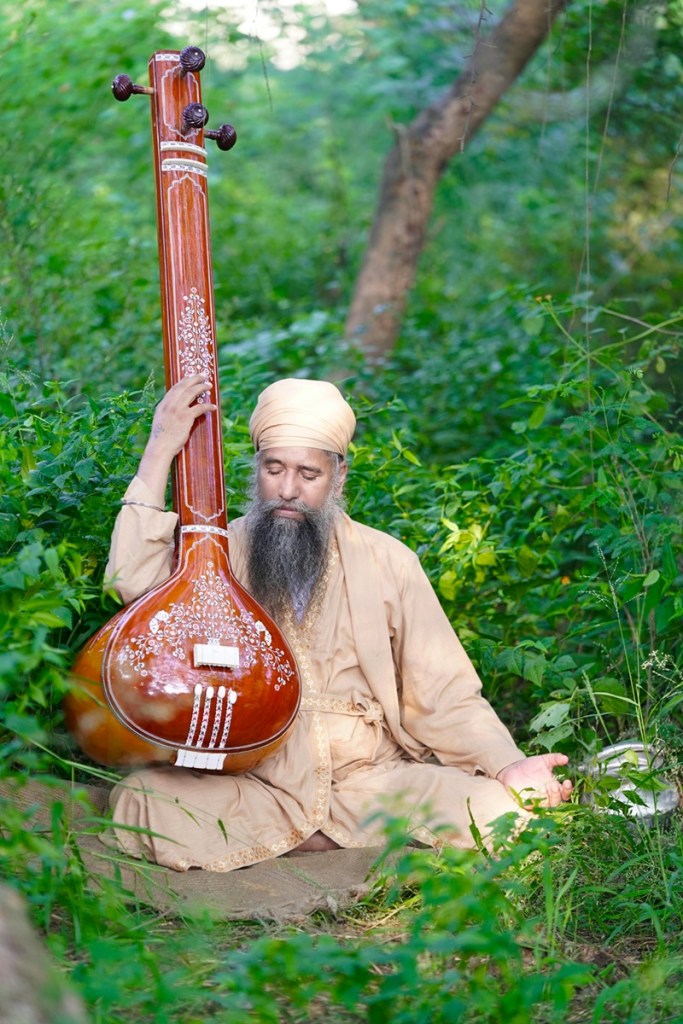
It is said that the distinctions in Hindustani and Karnataki style of classical music got more accentuated due to external invasion. In the north, the music incorporated certain Persian influences and was no longer restricted to temple performances. Singers performed in the courts of the Kings. Hence sometimes Hindustani music is referred to as Darbari Sangit. Same way many dance forms evolved in North India and most of them shifted from temple performances to Darbar Performances.
In south India the classical music did not lose its spiritual connections. It evolved over the years. Pioneers like Purandara Dasa, Thyagaraja, Muthusamy Dikshitar, Shyama Shastri and others composed thousands of songs that could be sung in Karnataki style. No doubt they themselves were great devotees and were deeply rooted in spirituality. They composed songs not only in Sanskrit, but also in other South Indian Languages.
Parallelly, classical dance forms like Bharat Natyam continue their primary association with spirituality. A pure classical Bharatanatyam dancer does not stray from themes based on Ramayana, Mahabharata or other puranas while choosing a theme for dance performance.
In the state of Odisha, both the Odissi style of music and the dance have long associations with temples. At present even though Odissi dance has got government recognition as a classical dance form, Odissi music has not been so lucky so far.
In Odisha style temple architecture, the Natya Mandap or the Dance hall is an essential feature. All the prominent composers of Odissi music have themselves been great devotees. The Jagannatha Temple at Puri and other temples in Odisha have been the prominent centres of performing arts. The Odisha kings, who patronised Odisha art forms, have themselves been deeply rooted in Indian spirituality.
Even though due to external influences, Hindustani music was no longer the exclusive domain of temples, not all forms of Hindustani music lost their exclusive connection with spirituality. One of them is the Dhrupad style.
Dhrupad is said to be the most ancient form of Indian classical music. Its practitioners claim its direct connection with the Vedas and many Dhrupad artists also call themselves as Nada Yogis. Later on, many Dhrupad artists converted to Islam. But they did not delink Dhrupad from its association with Indian spirituality. Ironically the development of Dhrupad style is credited to Tansen, who himself converted to Islam and became a darbari singer of Akbar.

Sound is produced because of friction. Sound that is pleasant and rhythmic is music. There is a state where one can listen to that music which is produced without any friction. The nada yogi, by using sound, aspires to reach that state where sound is produced without friction. In yogic language it is called the anahata nada. It is not different from the state of Samadhi as enunciated by Patanjali in his Yogasustras.
Same way, dance can be defined as the rhythmic movement of the body. The dancer in the Indian classical sense aspires to reach a state where the dance and the dancer become one. That state is also akin to the state of ultimate samadhi of a yogi.
This article is meant to create basic awareness about our music traditions and their link with spirituality. I think basics of Indian music and dance should be part of compulsory curriculum at school level, so that the common citizens can also act as guardians of the traditions.
There is a reason I am emphasising on creating awareness about the speciality of our classic music and their association with spirituality.
Music copyright theft is very common in Indian film Industry. Quite often even prominent music directors do not give credit to the original composers. Sometimes their violation of copyright and royalty laws are discovered after decades. If our citizens are aware, their bluff can be called on time. Moreover, film music directors not only do music piracy, they use it in a different context i.e, if the original composition was used in a spiritual context, the music director uses the composition in a vulgar context. Once again such facts are discovered long after the damage is done.
If the music directors are aware that they are making music for a public which has basic knowledge of such things, first of all, they would not dare to do such things. Even if they did, their unethical practices could be caught on time.
Another sad fact to note is that maestros of Indian classical music are often recognised in India only after they are recognised in the west. The recognition of musical greats like Pandit Ravi Shankar came via the west. If we are able to recognise the beauty of our classical music and have adequate knowledge about it, we would discover our geniuses without waiting for the chance discovery by the west.
This post is a part of Blogchatter Blog Hop.
 PEBBLES AND WAVES