
यमनियमासनप्राणायामप्रत्याहारधारणाध्यानसमाधयोऽष्टावङ्गानि॥२९॥
Yama, Niyama, Asana, Pranayama, Pratyahara, Dharana, Dhyana, Samadhi - are the eight limbs (Yogasutras - 2:29)
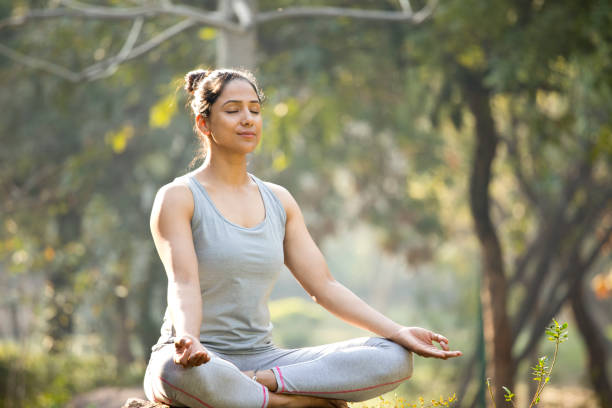
The first section of the Patanjali Yoga-sutras was Samadhi Pada . It describes the ultimate destination of Yoga. After ‘where to go’, logically speaking ‘how to go there’ should be told. The second section of Patanjali Yogasutras does that. It is called the Sadhana Pada. Sadhana means the means, or the resources. This sutra given at the top is the most quoted one of all the sutras of the second pada. Some organisations even call their yoga routine as astanga yoga inspired by this sutra. It is a different matter that the yoga teachers of such organisations themselves may not be knowing what are all these astangas or eight limbs and their significance.
Patanjalai says that yoga has eight limbs : Yama, Niyama, Asana, Pranayama, Pratyahara, Dharana, Dhyana, Samadhi. It should be noted that these are not eight steps. When we say steps, we practice one after another. These are eight limbs of yoga. Each of them is equally important, each one complements the other and each of them should be practised regularly. Practice of one will strengthen the others and ignoring one can weaken the others. Each of these limbs has been further elaborated upon in the subsequent sutras.
The first limb of astanga yoga is Yama. Some translators use the word restraint to denote Yama. However Yama is more of an inner attitude. You feel angry but try to restraint yourself from expressing it – that is not yama. Yama is when you don’t feel anger at all. Yama is developing the attitude whereby you don’t feel anger. Sutra 2:30 of Patanjali Yogasutras clarifies what constitutes Yama.
अहिंसासत्यास्तेयब्रह्मचर्यापरिग्रहा यमाः॥३०॥
Ahiṁsāsatyāsteyabrahmacaryāparigrahā yamāḥ||30||

Yama comprises of  - Ahimsa (non-violence), satya (truth), asteya(non-stealing), brahmacharya, aparigraha (attitude of non-possessiveness)
I think the height of Ahimsa would be when a soldier kills the enemy for the sake of Dharma and without any inner attitude of hatred for the enemy. In the battle of Kurukshetra Lord Krishna advises Arjuna to do that. What Mahatma Gandhi advised perhaps was more of the outer practice of Ahimsa. In history we come across many rulers who resorted to this outer practice of Ahimsa and later lost their kingdom and glory. Their subjects were subjected to untold violence and misery by the enemies.
Each of these five yamas must be contemplated deeply or else one is likely to develop a superficial outer attitude only. The second one is Satya or truth. Satyameva jayate – goes our official motto. Satyameva Jayate means ultimately the truth triumphs. We know this from our experience in real life and also from reel life. In most of the popular stories, people siding with falsehood have temporary upper hand but the truthful have the ultimate victory.
Being truthful also does not mean telling blatant truth all the time. If your job requires you to keep certain things secret, you are more truthful when you are loyal to your job. While dealing with a child or an immature person sometimes blatant truth is not told for the wellbeing of the child or the immature person. The end justifies the means.
In the context of yoga, it is important that you are truthful to yourself and you do not lie for selfish purpose or to cheat someone. Yoga is a journey in purifying your consciousness and being with falsehood pollutes your own consciousness. It is interesting to note that some people lie to themselves more often than they do so to others. We lie to ourselves to avoid feeling guilty and to rationalise mistakes. Only brutal honesty to oneself can help one to progress not only in the path of yoga but also in achieving other goals in life.
The third Yama is asteya or not to have the tendency to steal anything. When we use other’s resources with permission or after paying for it, it is not stealing. By the way, people not only steal material things, these days it is very common to steal intellectual property. Our Indian film makers are notorious for stealing plots, dialogues and music. They try to propagate it as their own. They even do not acknowledge its source. Of course, for the time being they pass for as genius. But when they are caught, there is a fall from grace. Recently music director AR Rahman was caught in one such controversy and only when the matter went to the Supreme court, did he agree to give credit to the original creator of the music.
In popular culture the word Brahmachary is used for one who is a celibate. Actually, Brahmacharya means to move about in Brahman. In a finer sense Bramacharya is making the mind regularly contemplate about Brahman. So, what is Brahman? Our ancient seers have written volumes about Brahman. All the Upanishads talk about Brahman. Discussing in detail about Brahman will be a book in itself. For our purpose, it will be enough to know that Brahman is the ultimate reality. It is the reality behind all the facades.
Aparigraha is the attitude that nothing belongs to you. The reality is that nothing belongs to you. Nothing is yours permanently. Yet we go on accumulating as if we are going to be here for ever to enjoy all our accumulations. No doubt we need resources to take care of our needs. But being feverish about accumulating material and non-material things takes us away from the path of yoga.
So Yama consists of Ahimsa, satya, asteya, brahmacharya and aparigraha. The second Limb of Yaga is Niyama. If yamas are all about inner attitudes, niyamas are all about external activities. Patanjali prescribes five niyamas:
शौचसंतोषतपःस्वाध्यायेश्वरप्रणिधानानि नियमाः
śauca saṅtoṣa tapaḥ svādhyāya īśvarapraṇidhānāni niyamāḥ
The first niyama is saucha – which means maintaining cleanliness in body and the surroundings. It is ironical that in India most of our so-called holy places are so filthy. There have been some improvements in recent years though. Still lots to be done. Perhaps that is the reason the real yogis are not found in popular places of pilgrimage. They prefer places uninhabited or least habited by human beings.
The second niyama is Santosha – to be contended. But how can it be an external practice? Santosha is being contended with whatever outer resources available, without grumbling, without complaining.
The third Niyama is tapah. Tapah includes all the practices that help one to bear unfavourable physical and mental conditions. Tapah is all about toughening oneself. It may be easier to reach the moon than to reach the inner world leading to samadhi. Things are not going to be always smooth. The other seven limbs of yoga do help one in maintaining calm in the face of adversity. But tapah includes many esoteric practices besides asana, pranayama etc.
Swadhyaya is studying oneself. It is about making truthful self-assessment about oneself. One who is intent upon improving oneself to excel in the world also does this. The same is applicable for inner journey. One should not blindly hold on to a set of techniques.
The last niyama given is Iswara Pranidhana. Patanjali tried his best not to bring God into the picture. Even if Patanjali brings the concept of God, it is not in the usual sense of blindly believing in a God sitting somewhere in heaven. Patanjali does not define God. In subsequent sutra he says – tasya bachaka pranavah – Om is its indication. Once again Om is a matter of practice. There are whole systems of yoga based on the sound Om. As you practise certain asanas, same way you can practise Om. In a subsequent post we will explore in details about this.
In this sutra Patanjali emphasises the importance of surrender. People who become skilled in anything often become arrogant. Same may happen to a yogi who has mastered many techniques. This arrogance is very subtle. The arrogance of a highly religious person is very subtle. If all such skilfulness in practising yoga leads one to arrogance, one will be deviated from the path. Hence the need of surrendering to a higher power. Iswara pranidhana is not exactly surrender. It is a kind of gratefulness. After actively doing everything if you get the feeling that I have not done anything then you are in Iswara Pranidhana.
So far in this post we have discussed two of the eight limbs. Discussing all the limbs in detail will make this post unusually lengthy. Hence, I will briefly discuss about Pratyahara and Samadhi and discuss the rest i.e asana, pranayama, dhyana & dharana, in detail in later posts.
Pratyahara is replacing the outward going tendencies of the senses with inward focus. It can be a great technique to bring in awareness. You see great food. You are tempted to eat though due to some reason you should not eat that kind of food. Ask yourself – who is it that wants to eat the food. Bring your attention from food to the one who wishes to enjoy the food. Bring your attention from the scene to the seer. While trying to define yoga, we also talked about the witness consciousness. Hope you got the hint.
Interestingly, we have discussed in the second post of this series that Samadhi is the goal of yoga. We have explored the symptoms of a person who is established in Samadhi. But here in this second pada, it appears as a method. Samadhi is the goal as well as a method. The goal of yoga is to be in samadhi 24×7. However, that does not prevent one to have one’s daily dose of samadhi. Samadhi is a combination of two words – Sama and adhi. It means – to be in state of equanimity. Sincere practices like asana, pranayama, or meditation result in a state of equanimity. But, with regular sincere practice, one can come to the state of samadhi just like that without needing the help of these techniques.
If you have ever done sargam practice you will be able to relate well with this example. In the initial stage of vocal practice, to reach any note other than Sa, you have to take the help of Sa. But after some days of practice, you can reach any note without taking the help of the root note Sa. Same way, with practice, you can come to the state of samadhi without needing the intermediary steps. It used to happen with Rama Krishna Paramahansa. It could happen to you.
This post is a part of Blogchatter A2Z Challenge 2026
This year my theme is – Yoga A2Z
 PEBBLES AND WAVES