
After going thorough my previous posts in this BlogChatterA2Z series, the reader by now must have got some idea about yoga. Now it is time to explore the formal definitions of yoga.
According to Maharshi Patanjali:
योगश्चित्तवृत्तिनिरोधः - Yogaschittabritti Nirodhah
If the reader is clear about the Sanskrit words chittah, britti and nirodhah, there is no need to go for the translation. However, even if one knows the current meaning of these words, it should be noted that the meaning of words undergo changes over generations. moreover, the words used in a spiritual context may have different connotation when it is used in a utilitarian context.
I find that different books have translated it in different ways. Some of he translations that I have come across are:
Chitta : Mind, intellect, ego
Vritti : Waves, movement, thoughts or desires of the mind
Nirodhah : to stop, control, or calm down
When the mind becomes completely calm (quiet or still), the state of yoga is attained.
(source : google AI)
Citta: Mind-stuff, consciousness, or the field of mind (includes intellect, ego, and memory).
Vṛtti: Fluctuations, modifications, waves, or ripples.
Nirodhaḥ: Cessation,stilling, regulation, control, or restraining.
Alternative English Interpretations
"The restraint of the modifications of the mind-stuff is Yoga." — Swami Satchidananda
"Yoga is the control of thought-waves in the mind." — Swami Prabhavananda
"Yoga is the regulation of the mind-field."
"Yoga is calming the mind through the meditative techniques."
(Source : Yogapedia)
According to me, some of the definitions are way off the mark, while the one given by the google AI is nearer in meaning, though it dilutes what is indicated.
My interpretation would be – Yoga is all about developing the ability to have a say over the tendencies of the consciousness.
Next sutra of Patanjali is linked to this definition and will contribute to clarifying what is indicated by this sutra containing the definition. It states :
तदा द्रष्टुः स्वरूपेऽवस्थानम् - Tada drastuh shwarupe abasthanam
Thus sutra too has many interpretation. My interpretation would be: As a consequence, one abides in a state of witness consciousness. Some translate it as – then one abides in one’s true nature.
There is not much difference in both because ‘one’s true nature’ is not considered different from ‘the state of witness consciousness’. But I deliberately chose ‘witness consciousness’ over ‘true nature’ as we will see in subsequent expositions.
This state of witness consciousness is a recurring theme in Upanishads and other ancient Indian philosophies. Mundaka Upanishad tells the story of two birds.
द्वा सुपर्णा सयुजा सखाया समानं वृक्षं परिषस्वजाते ।
तयोरन्यः पिप्पलं स्वाद्वत्त्यनश्नन्नन्यो अभिचाकशीति ॥
dvā suparṇā sayujā sakhāyā samānaṃ vṛkṣaṃ pariṣasvajāte |
tayor anyaḥ pippalaṃ svādv atty anaśnann anyo abhicākaśīti ||
Two well winged creatures, as if inseparable twins, sit side by side on the branch of a tree. One eats the sweet and bitter fruits of the tree, while the other does not eat but continues to watch.
Recall the time when you were watching your favourite movie. You were so engrossed in the movie that you were not aware about yourself, you were not aware that you were in a cinema hall watching a movie. You were there with that character, you went where the character went. You felt what the character felt.
But it is possible that you are watching a movie and at the same time you are aware that you are watching motive. Problem is that you can have this kind of awareness for a brief moment. You will not even know when you have lost such awareness and have once again identified yourself completely with the character in the movie. But when you progress in the path of yoga such moments of awareness will increase and a time may come when your in that state of witness consciousness all the time.
Great yogis like Ramana Maharshi and Rama Krishna Paramahansa suffered from cancer. But the pain was never reflected in their face. They also refused to cure themselves by using yogic powers. For them it was like the bird who was witnessing. Cancer effected their body, but not their consciousness.
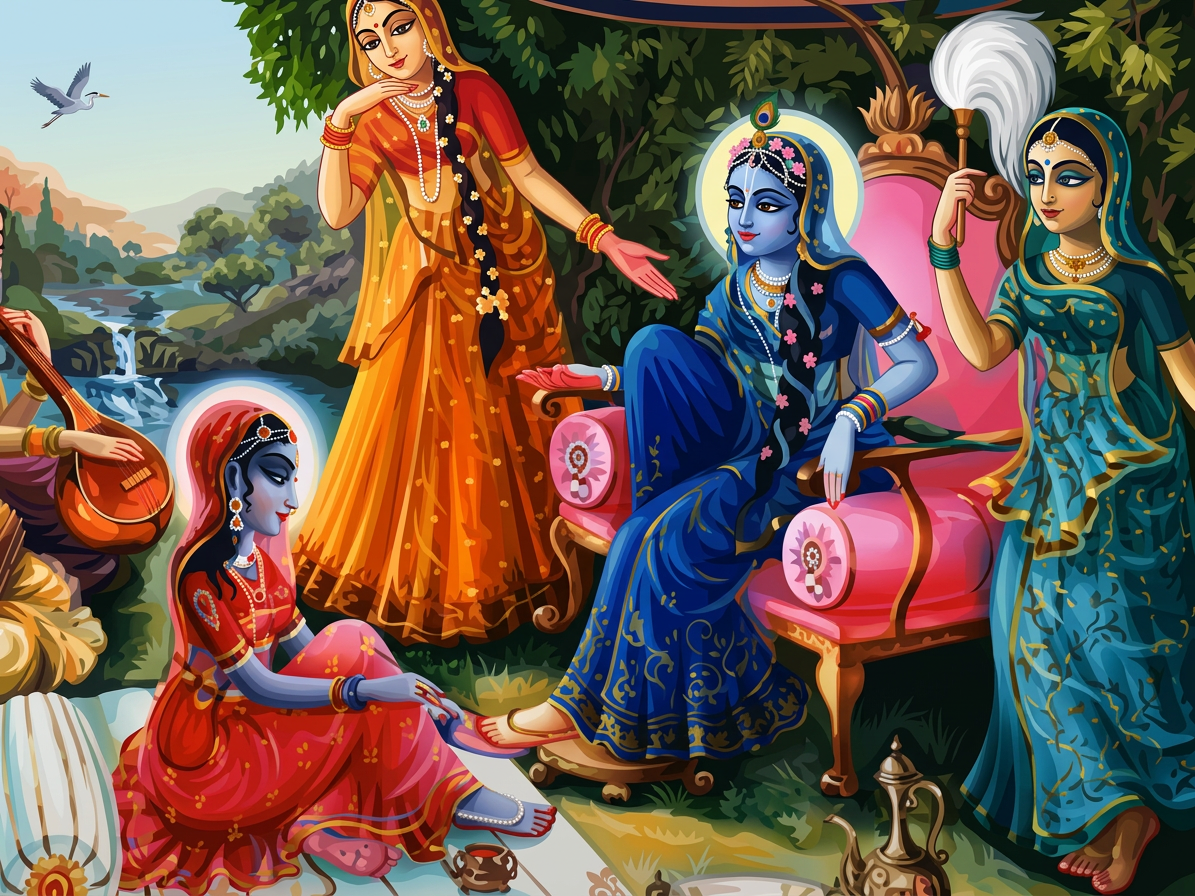
Witness consciousness is a theme in Lord Krishna’s Rasa Leela also. It is called Sakshi bhav. The word Sakhi (सखी) is a diluted form of Sakshi (साक्षी). While Radha undergoes pangs of separation, her sakhis or friends watch and describe it. They help her find Lord Krishna. The witness consciousness is our friend. It makes us find ourselves amid the turmoils of our emotions.
Have you ever been in a state of witness consciousness? Or, you find all these concepts somewhat confusing. I would love to your experiences or views in the comment.
While defining yoga, Patanjali has talked about the modes of consciousnesses. What tare those chitta vrittis or the modes of consciousness? I will address this issue in detail in a subsequent post.
This post is a part of Blogchatter A2Z Challenge 2026
This year my theme is – Yoga A2Z
 PEBBLES AND WAVES
Your post took me back to the first of my diploma class in yoga. The sutras always speak to you and surprisingly the more I read, the more depth I find each time, a new perspective as well. Thank you for sharing your knowledge and opinion.
LikeLiked by 1 person
Nice to know about your interest in Yoga. Thanks for stopping by.
LikeLike
This is very interesting and informative. The thing about Sanskrit to English translations is that none can be exactly correct. They just come close to the original to an extent.
LikeLiked by 1 person
So true. English translation of old Sanskrit texts brings lots of distortions. Of course one can have a sense of it. Thanks for stopping by.
LikeLike
true sense of YOGA
LikeLiked by 2 people
Thank you
LikeLike
I adored how you used the example of a movie to describe the effects Yoga can have on one. A great read, Sir.
LikeLiked by 2 people
Thanks for your appreciation and for stopping by
LikeLike
Thought-provoking explanation of yoga and witness consciousness. Your interpretation makes ancient sutras feel practical, relatable, and deeply insightful for modern readers.
LikeLiked by 1 person
Thank you for your kind word and for stopping by.
LikeLike