
In the blog post Universal Appeal of Yoga I have brought out as to how people have risen above national, religious, ideological, and sectarian interests to adopt yogic practices and how it appeals to a broad spectrum of people. While many of the things of ancient civilisations across the world were exclusive male bastions, it is surprising to note that in ancient India there were female based yogic cults.
The construction of temples dedicated to yoginis (female yogis) is testimony to this. In ancient India, maybe, there were hundreds of them. A few of them somehow have survived the vagaries of time and the savagery of the Mughal religious zealotry.
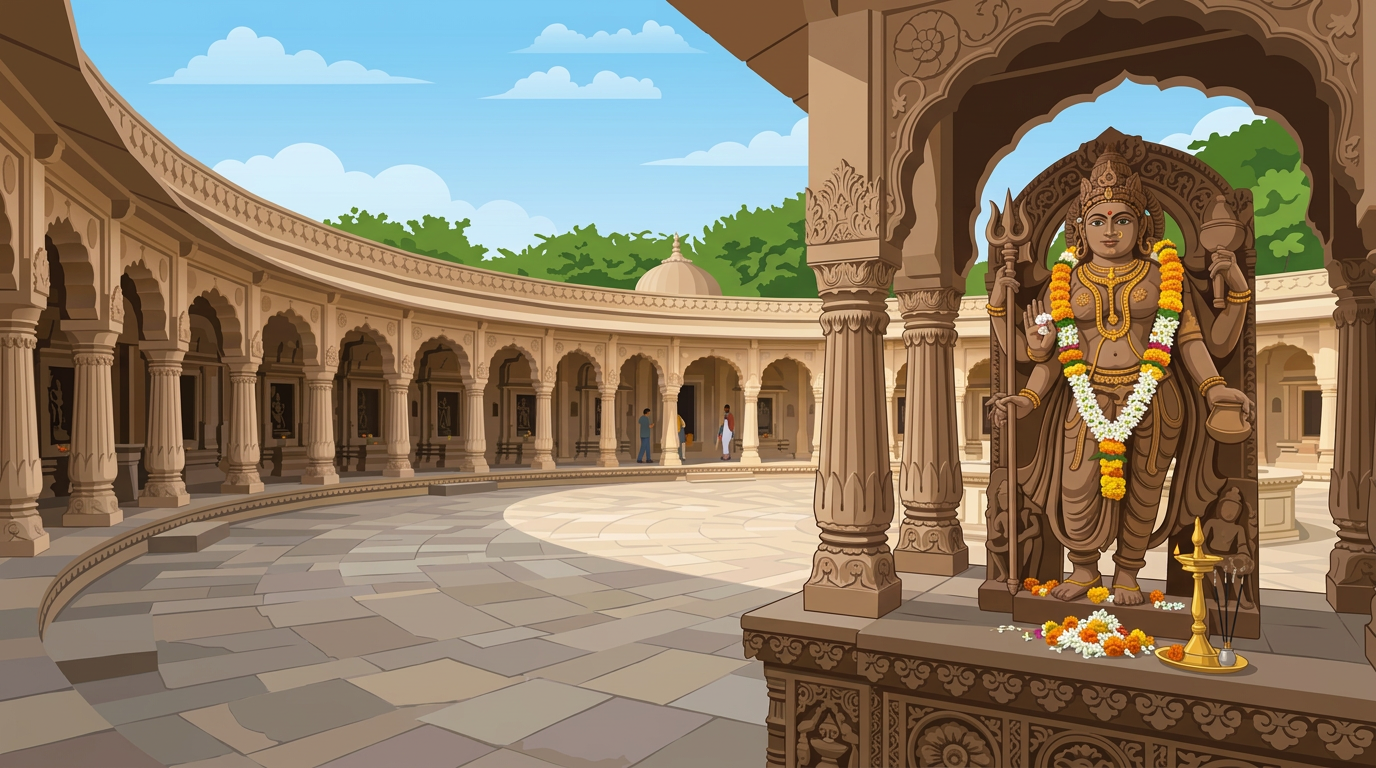
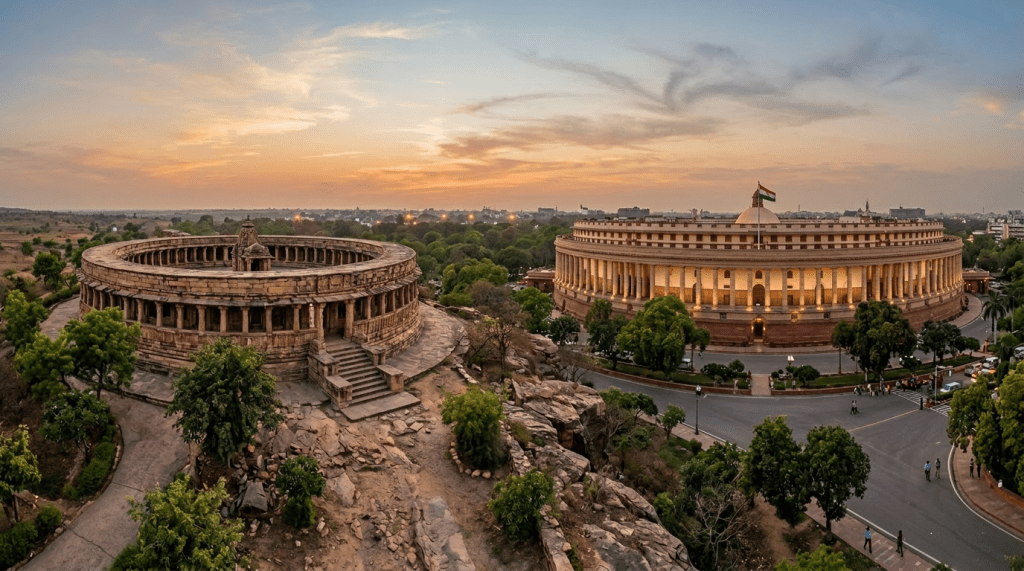
A few years of back I had the privilege of visiting one of such temples. It is located at Hirapur near Bhubaneshwar, Odisha. It is a circular temple which is open to the sky. A small temple at the centre has the idol of Kaali. It is said that earlier it used to house the idol of Shiva. There are sixty four inner niches and these niches house sixty female idols in various postures.
These temples are unique in their architecture. They do not follow the usual temple constriction plans of the middle ages. In temples the idols are linked to popular characters from our itihas like Ramayana and Mahabharata or other puranas. But here this is not the case.
When you do research you cannot find any concrete material about them. Scholars are still doing research on these temples. Some say these temples were part of the rituals of a yogic cult that is now extinct.
In Indian spiritual traditions yoginis are associated with females with occult powers. Did their occult powers come because of their yogic practices? Patanjali, in his yoga sutras, has made extensive mentions about these yogic powers or siddhis.
Archaeological artefacts associated with women in yogic postures or mudras have been found from time to time. From these artefacts and from the ancient vedic texts it can be referred that women were actively associated with learning and teaching not only hatha yoga but also other forms of yoga like jnana yoga, bhakti yoga etc.
There were twenty seven women sages or rishikas who composed many of the hymns of Rigveda. The name of Mirabai stands out as a practitioner and teacher of Bhakti yoga. She is also a mystic poet. Another prominent mystic female poet and spiritual guru is Lalleshwari or Lal Ded. She was born in Kashmir in the fourteenth century.
Hope, more research is done to find out the association and contribution women for the development of the yogic traditions in India. Meanwhile it is interesting to note that the new parliament house of India has been inspired by the architecture of the yogini temples. But the presence of women in parliament is still not proportional. Hope, one day this shortcoming too is corrected.
This post is a part of Blogchatter A2Z Challenge 2026
This year my theme is – Yoga A2Z
 PEBBLES AND WAVES
There is so much to learn and unpack about our own history, and culture. Yes, we form opinions with half knowledge. Anything associated with the occult is negative, and most things with Yoga are positive. So your questions about the occult powers resulting from Yoga practice (a higher state of being perhaps), is a very interesting question.
LikeLiked by 2 people
Yes. It is possible to get occult power through the practice of yoga. But, it becomes a hindrance in reaching the goal.
Thanks for stopping by
LikeLike
You post has made me curious about these forgotten yogini temples.
LikeLiked by 2 people
Thank you
LikeLike
What a wonderful and insightful post! Loved learning about the mysterious Yoginis and their temples. Such an important yet lesser-known part of India’s yogic heritage. #ReadTheNew #BlogchatterA2Z
LikeLiked by 1 person
Thank you for your kind word and for stopping by.
LikeLike
Very interesting article. We still have to learn so much about our ancient traditions.
LikeLiked by 1 person
Thank you for your kind word and for stopping by.
LikeLike