
तपः स्वाध्यायेश्वरप्रणिधानानि क्रियायोगः (योगसूत्र 2.1)
Tapaḥ svādhyāyeśvara-praṇidhānāni kriyā-yogaḥ (Patanjali Yoga Sutras 2:1)

योगस्थः कुरु कर्माणि सङ्गं त्यक्त्वा धनञ्जय।
सिद्ध्यसिद्ध्योः समो भूत्वा समत्वं योग उच्यते।।

yoga-sthaḥ kuru karmāṇi saṅgaṁ tyaktvā dhanañjaya
siddhy-asiddhyoḥ samo bhūtvā samatvaṁ yoga uchya  (Bhagavad Gita 2:1)
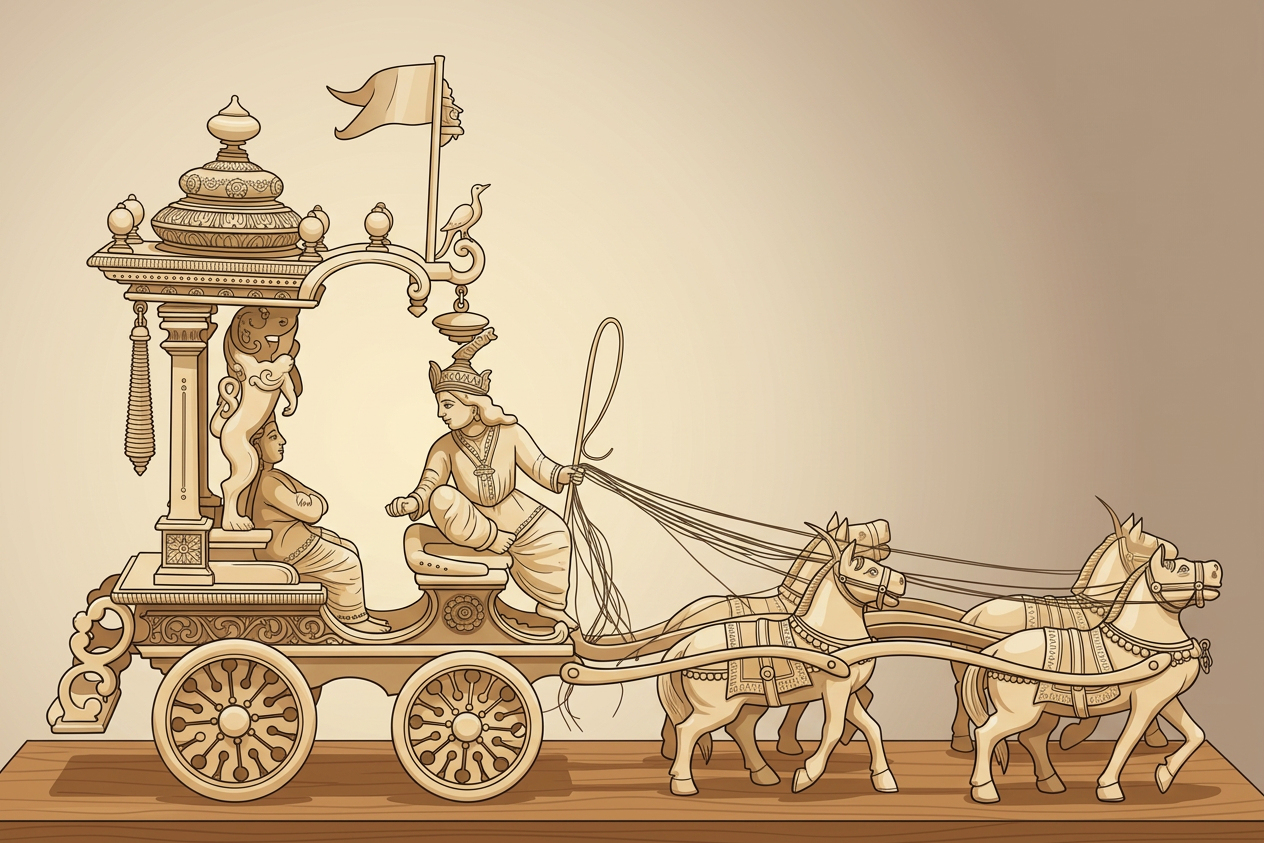
After describing Samadhi in the first section of the Patanjali Yoga Sutras, in the second section titled Sadhana Pada Maharishi Patanjali talks about the means to achieve Samadhi. The first sutra of this section is – Tapaḥ svādhyāyeśvara-praṇidhānāni kriyā-yogaḥ . It means Kriya Yoga consists of austerities, self study and surrender to Ishwara. We have seen in the post Eight Limbs of Yoga that these are also part of the second limb of yoga known as Niyama.
These three words – Tapah, Swadyaya and Iswara Pranidhana indicate respectively to Hatha Yoga, Jnana yoga and Bhakti yoga. But Patanjali’s recommendation is primarily a combination of Hatha yoga and Jnana Yoga. There isn’t too much emphasis on surrendering to a divine force even though its role cannot be ignored, acording to the Rishi.
Kriya yoga is primarily suitable for a monastery life. A householder may adopt some of the elements of Kriya yoga but he cannot devote all his time to it. Being a Kriya yogi and a householder simultaneously may be extremely difficult. But what is possible is that one may enter life of a householder after gaining some mastery over Kriya yoga.
Perhaps the ancient system of four stages of life was devised keeping this in view. The first stage was Brahmacharya. In this period one was engaged in contemplation of Brahman and did various austerities. This stage was devoted to learning both spirituality and worldly professions.
The second stage was Grihastra. In this stage one became a family man and a responsible member of the society. He took up a profession to earn a living and contribute to the society. The third stage was Vanaprastha. It is a life of semi retirement. In this stage, the focus was to prepare the next generation to take over the responsibilities and to prepare oneself for retirement. The final stage was Sannyasa. In this stage one renounced material life and focused fully on spiritual practices.
Life should be a mixture of spirituality and social responsibility. It is all about maintaining a balance between spiritual life and material life. This was how our ancient seers envisioned an ideal human life.
Lord Krishna’s central message in the Bhagavad Gita is that the Grihasta life should also be infused with yoga. And at no cost should one shun the social responsibilities. yoga-sthaḥ kuru karmāṇi saṅgaṁ tyaktvā dhanañjaya . Lord Krishna advises Arjuna to do the ordained duty while being established in yoga and not being attached to the fruits of the action. Lord Krishna wanted Arjuna to be a Karmayogi.
Bhagavad Gita has thousands of interpretations. There are variations as to the meaning of particular stanzas. There are variations as to the central message of the Gita. According to some the central message is Jnana yoga. Some argue that the central message is Bhakti.
But the unique message of bhagavad Gita is its emphasii on Karma Yoga. No doubt Lord Krishna talks about Jnana yoga, Bhakti yoga and so many other things. But what was his goal? To prevent Arjuna form running away and make him face his social obligations. After listening to the Bhagavad Gita, Arjuna did not run away to become a Sannayasi. With renewed vigour, he stuck to his role as the defender of the Dharma and as the vanquisher of the unrighteous.
Same way, the central message of Ramayana too is Karma yoga. No doubt in many retold versions of Ramayana including that of Saint Tulsidas, Bhakti and Jnana yoga etc. are discussed. Lord Rama did his worldly duties being firmly rooted in Dharma.
This post is a part of Blogchatter A2Z Challenge 2026
This year my theme is – Yoga A2Z
 PEBBLES AND WAVES
It’s the need of the hour.. a part n parcel of our healthy life.
LikeLike