
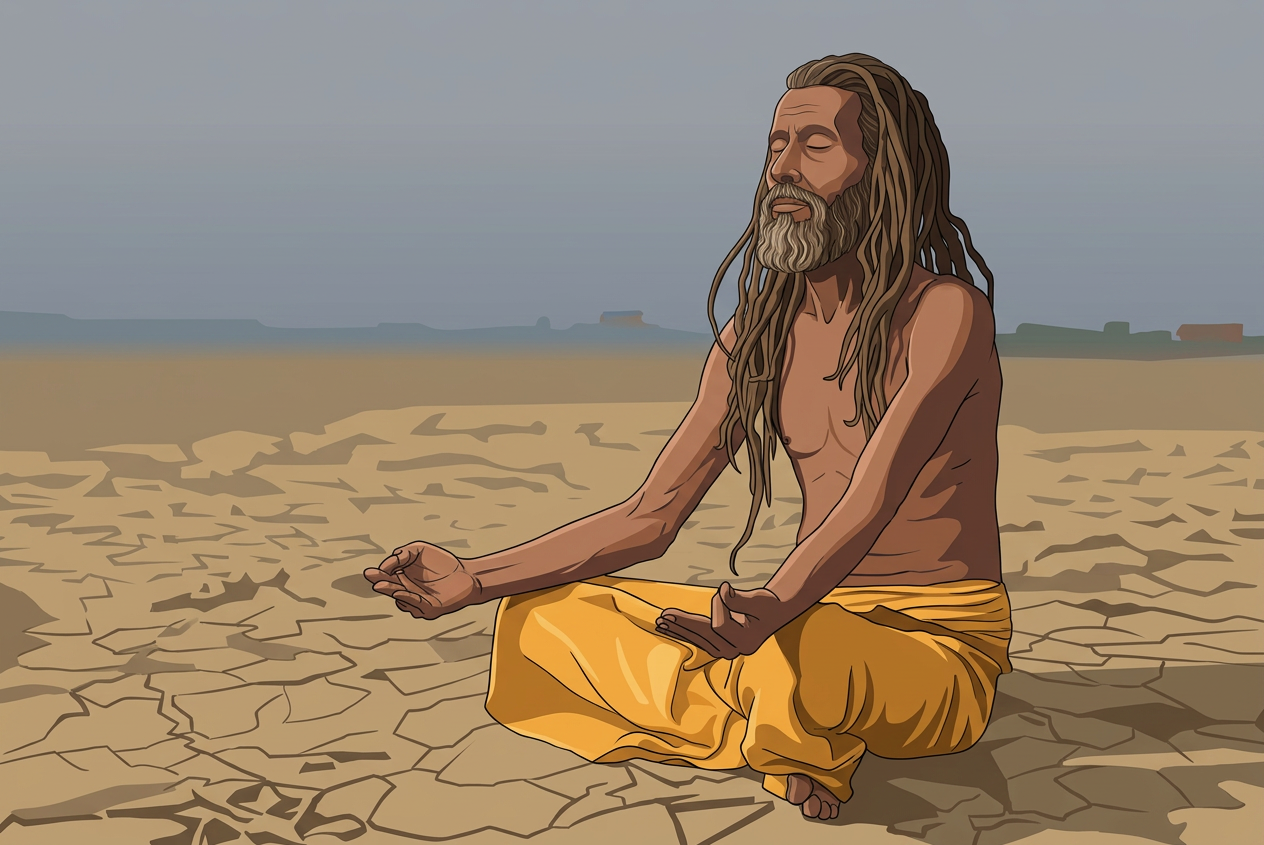
The word mantra is now part of English Dictionary. According to Oxford Dictionary – a mantra is a word, sound, or phrase repeated frequently, particularly during meditation or prayer to aid concentration. It also refers to a frequently repeated statement or slogan that expresses a core belief or principle.
Sanskrit scholars would define the word as – Mananāt trāyatē iti mantrah – which may be vaguely translated as – because of the repetition of that you are saved from the vagaries of the world. Another definition links it with the mind. Mantra consists of man (mind) and tra (tool). It is a tool to transcend the mind, because samadhi is reached when mind is transcended. Thus, here comes the link of mantra with yoga.
Mantra is part of bhakti yoga. Goswami Tulsidas emphasyses repetition of mantra as one of the nine elements of bhatkti as we have disuessed in the post Jnana vs bhakti yoga.
Mantra is used as a help in meditation. In some meditation techniques you may not be required to repeat it constantly. When mantra is repeated constantly it become japa.
Mantra Japa is a prominent part of all the religions that originated in India. It is part of Buddhist, Jain as well as Sikh traditions. Religions that originated in other countries also use japa.
Even though sound is produced while reciting a mantra, Mantra Yoga is different from Nada Yoga. In Nada yoga also sound is used but it is not restricted to only one type of sound. We will discuss in detail about Nada Yoga in the next post.
Three types of Mantra
Mantras can be of three types. Some mantras have meaning. These are lengthy are usually in the form of a short prayer. For example the Gayatri Mantra is a prayer to the creator of the universe to illuminate the intellect. It goes like this:
ॐ भूर् भुवः स्वः
तत् सवितुर्वरेण्यं
भर्गो देवस्य धीमहि
धियो यो नः प्रचोदयात् ॥
Gayatri Mantra is part of every Hindu priest’s inner purification ritual. The pandit gets his power to bless others because of this mantra. Apart from this general Gayatri Mantra, each deity has its own gayatri. It is invoked during the puja rituals. The devotee of that particualr deity may chant it a numbe of times based on the recommendations of his guru.
The lines – Hare Krishna Hare Krishna Krishna Krishna Hare, Hare Rama Hare Rama Rama Rama Hare Hare – is known as the maha mantra or the mantra of the mantras. It is a prayer to Lord Vishnu to save oneself from the vagaries of material world useing the names of his two prominent avatars. This mantra is also sung as bhajan. You might have come across this in Krishna temples or in ISKCON gatherings.
The second type of mantras are the names associated with any deity. It is said that the name of Rama is more glorious than Rama himself. Addressing Parvati, Lord Shiva says that:
श्री राम राम रामेति रमे रामे मनोरमे ।
सहस्रनाम तत्तुल्यं रामनाम वरानने ॥
Sree Rama Rama Rameti Rame Rame Manorame
Sahasra-Nama Tat-Tulyam Rama-Nama Varanane

Oh my lady whose face is so auspicious, it is such a joy for me to chant the name of Rama. One chanting of the name of rama is equal to chanting of a thousand different names of Vishnu (A composition known as Vishnu Sahasranama contains a thousand different names of Lord Vishnu).
A word of caution
However, saints advise that instead of chanting a single name chanting of joint names are better. Chanting Sri Sita Ram is better than chanting only Ram. Radhe Krishna is better than taking the name of only Lord Krishna.
The third type of mantras are bija mantras. Bija means seed. These mantras may not have any meaning. They are chanted because of the sounds they produce. They are chanted because of their specific effect on the chakras of our body.
Mantra chantings are esoteric practices. It should not be attempted by a novice. It is advisable to take mantra initiation from a Guru to get the benefit of the mantra and to save oneself from the side effects.
Coming to bija mantras, these are extreme esoteric practices. While following the proper method will bring balance to our chakras, chanting in a wrong way may cause harm. Hence these should be practised under expert guidance.
This post is a part of Blogchatter A2Z Challenge 2026
This year my theme is – Yoga A2Z
 PEBBLES AND WAVES
A thoughtful and grounded piece. You’ve beautifully shown that a mantra is not just a word, but a living tool to steady and transcend the mind. The clarity on types of mantras and the gentle caution about guidance adds real depth. Looking forward to your take on Nada Yoga.
LikeLiked by 1 person
Thank you.
LikeLike