
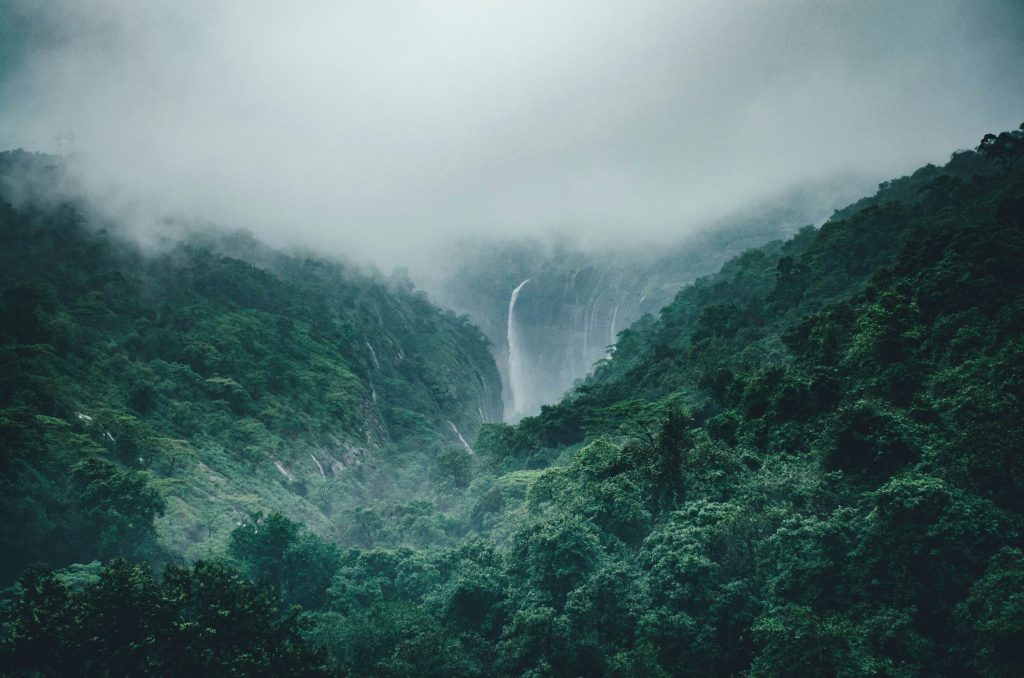
In popular culture rain has been associated with romance. Inspired by the rainy season, classical poets like Kalidasa and many other poets have composed verses highlighting either the sensual elements or the feelings of longing borne out of separation. Many popular folk songs and film songs of our times are no different.
But there can be a different way to see the rainy season. As Sant Tulsidas in Ramcharitmanas says:
“जाकी रही भावना जैसी, प्रभु मुरत देखी तिन तैसी”
 jaki rahi bhabana jaisi, prabhu murat dekhi tin taisi
Different people saw the same Lord Rama in different ways. Ravana saw Him as enemy, where as Ravana’s own brother Bibhishana saw in Him a friend and saviour. Ultimately, how we see things boils down to our own leanings, our own attitude etc. We see what we are conditioned to see.
Thus, while many poets of his own time wrote verses on rain in sringar rasa that sometimes bordered on explict vulgar descriptions, Saint Tulsidas saw in rain all the lessons that a person can learn not only to be a good human being, but also to progress on the spiritual path. In fact the following dohas, where in Lord Rama describes his feelings to Laxman on the onset of monsoon, are some of my most favourite dohas of Ramcharitmanas.
घन घमंड नभ गरजत घोरा। प्रिया हीन डरपत मन मोरा॥1
दामिनि दमक रह घन माहीं। खल कै प्रीति जथा थिर नाहीं॥2
बरषहिं जलद भूमि निअराएँ। जथा नवहिं बुध बिद्या पाएँ॥3
बूँद अघात सहहिं गिरि कैसे। खल के बचन संत सह जैसें॥4
छुद्र नदी भरि चली तोराई । जस थोरेहुँ धन खल इतराई ।।5
भूमि परत भा ढाबर पानी । जनु जीवहि माया लपटानी ।।6
समिटि-समिटि जल भरहिं तलावा । जिमि सदगुन सज्जन पहि आवा ।।7
सरिता जल जलनिधि महुँ जाई । होई अचल जिमि जिव हरि पाई ।।8
ghana ghamand nabha garajat ghora, priyaheen darpat man mora
damni damaka rahahin ghana mahin, khala ke preeti  jatha theera nahin
barashahin jalada bhumi niaraen, jatha nabahin buddha vidya paen
bunda aghata sahahi giri kaise, khala ke bachana sant saha jaise
chhudra nadi bhari chali torai, jasa thorehun dhana khala itarai
bhumi parata bha dhavar pani, janu jeevahi maya laptani
samiti samiti jala bharahin Talawa, jimi sadaguna Sajjan pahi awa
sarita jala jalanidhi mahun jaee, hoi achala jimi jiva hari paee
Those who are familiar with vernacular awadhi will need no translation or further elaboration. The meaning of each stanza will strike a chord in their minds immediately. However, for the benefit of others here is my way of expressing the meanings:
The dense insolent sky thunders
and here I am, without my love, so afraid.

The lighnting, though so bright, is short lived,
like the unsteady love of a wicked person.

Clouds rain after (humbly) coming down close to earth
Their humblness is like that of the wise after their learning.

However the mountains tolerate the thrashings of the rain
Just as the saints tolerate the wicked person's stinging words.

Small streams, when full of water, defy boundaries
Just like the wicked who become conceited with a little gain

Falling on earth, the water becomes dirty
Similarly, the soul gets entangled (after coming down to earth)
in the wolrd of maya

The pond keeps on collecting water from all the sources
Similarly, the good accumulate virtues from whatever sources available.

On entering the ocean, the river water becomes still
Similalry all restlessness vanishes when the individual meets with God.
I have tried to tranaslate into English the essence of the dohas. However, the dohas of Ramcharitmanas were not meant merely to be studied or recited, but to be sung in a variety of classic, folk, and popular styles. The compositions, besides being so poetic, carry the vibes of a saint poet like Tulsidas. It is a different feeling altogether when you sing these dohas of Tulsidas in original or hear the dohas being sung by an accomplished singer.
It is worth noting how the first stanza contrasts with the second stanza. In the second stanza the love of a wicked person is compared with the fleeting nature of lightning, while Rama like a layman is troubled by the absence of his beloved. At a time when having multiple wives was the norm, Rama set an example by taking vow to have only one wife.
These eight stanzas contain the whole essence of all the shastras. Hints are given as to how one should conduct oneself in all the four dimensions of human life – dharma, artha, kama and moksha. It is natural for any human being to be muddied with maya after taking human birth. The river, in spite of getting muddied and facing many obstacles, does not forget its ultimate goal – to meet with the ocean and dissolve its own identity. Same way, the ultimate goal of individual soul is to seek and merge with the universal soul. Till it happens, there is no escape from the restlessness that is inherent in each individual life.
Do we also get some hints as to why India, being the land of so many saints, have been so tolerant through out the history? Of course many wicked elements have been incessantly trying to portray a different picture. But let us still try to be tolerant to their rants:
बूँद अघात सहहिं गिरि कैसे। खल के बचन संत सह जैसें॥
 PEBBLES AND WAVES