

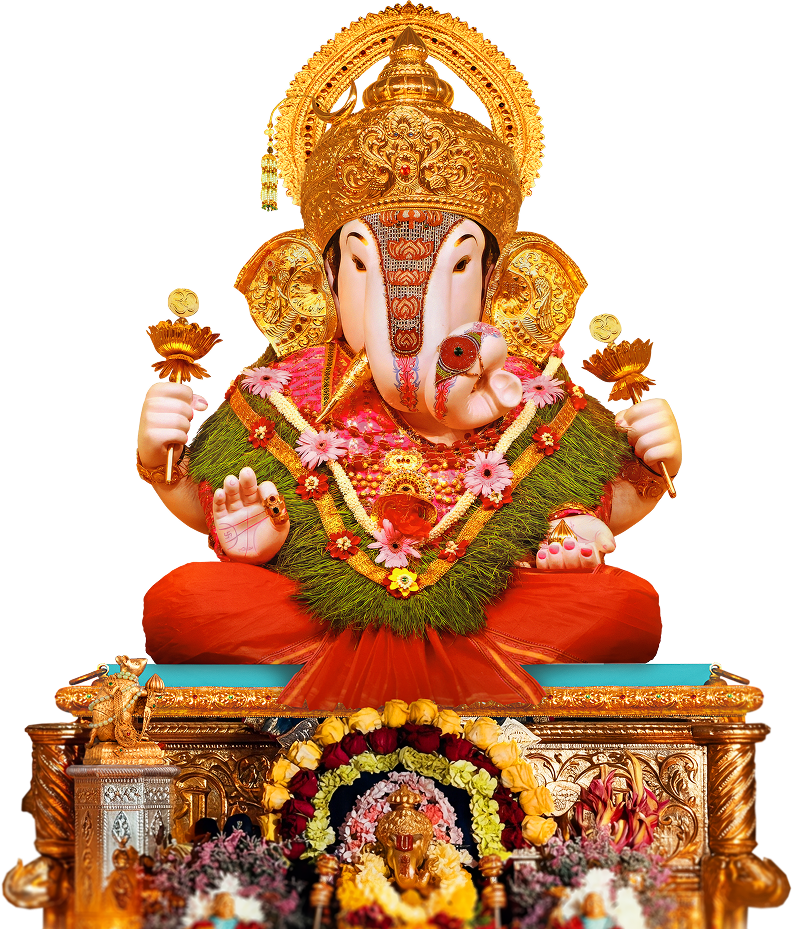
Every year, India celebrates her Independence Day on 15 August, and not long afterwards comes the joyous festival of Ganesh Chaturthi. Their nearness on the calendar may be accidental. Yet history gives this coincidence a deeper resonance, for Lord Ganesha once became an important symbol around which people gathered during India’s struggle for freedom.
For generations, Ganesha worship had largely belonged to homes, temples and local communities. Towards the end of the nineteenth century, Lokmanya Bal Gangadhar Tilak recognised that devotion could also become a force for social awakening. In 1893, he popularised the Sarvajanik Ganeshotsav, transforming what had often been a private religious observance into a vibrant public celebration.
Under colonial rule, when political mobilisation was difficult and public gatherings could attract suspicion, Ganeshotsav provided a cultural space in which people could meet, converse, listen to speeches, witness plays and musical performances, and gradually awaken to a shared national consciousness. Before political freedom could be achieved, perhaps a deeper unity had to be rediscovered. Ganesha, the remover of obstacles, thus became associated in an unexpected way with the removal of barriers between people.
The sacred date of the festival itself takes us far deeper into India’s spiritual memory. According to Puranic tradition, Shukla Chaturthi—the fourth day of the bright fortnight of the month of Bhadrapada—is especially sacred to Lord Ganesha. On this day devotees invoke the elephant-headed deity who represents wisdom, auspicious beginnings and the overcoming of obstacles.
There is profound symbolism in the tradition of remembering Ganesha before beginning any important undertaking. His large head suggests expansive wisdom; his great ears remind us to listen; his small, discerning eyes call for concentration; and his broken tusk has long been interpreted as a symbol of sacrifice and dedication. Even his unusual form seems to tell us that wisdom is not always found in conventional appearances.
Yet Ganapati belongs not only to the religious landscape of India. Across centuries, his image travelled with merchants, monks, craftsmen and cultural exchanges to many parts of Asia. Forms of Ganesha can be found in Nepal, Thailand, Cambodia, Indonesia and even farther east.
That ancient cultural journey continues even today. In Phuket, Thailand, a Ganesha shrine was established under the inspiration of Pune’s celebrated Shrimant Dagdusheth Halwai Ganpati, reflecting the deep reverence for Ganapati among many Thai devotees. What began centuries ago as the movement of ideas and symbols across seas continues in a modern form as a bridge of affection between cultures.
Thus Ganesha appears before us in many forms: the beloved child of Shiva and Parvati, the guardian of auspicious beginnings, the embodiment of wisdom, a symbol around which Indians once gathered in the cause of freedom, and a deity whose presence transcends national boundaries.
Perhaps therein lies one of the deepest meanings of Ganapati.
The remover of obstacles does not merely clear the path before us; he also reminds us to remove the walls we build between one another.
 PEBBLES AND WAVES
Your post has arrived just in time for the festivities. Ganesha, as the remover of obstacles and well-wisher of all, has long been a unifying presence in India’s social fabric. The evolution of Ganesh Chaturthi into an occasion for large community gatherings also gave it an important place in India’s freedom movement. And his enduring influence across Southeast Asia only adds to the sense of his universal and benevolent appeal.
LikeLike